Robotics AI
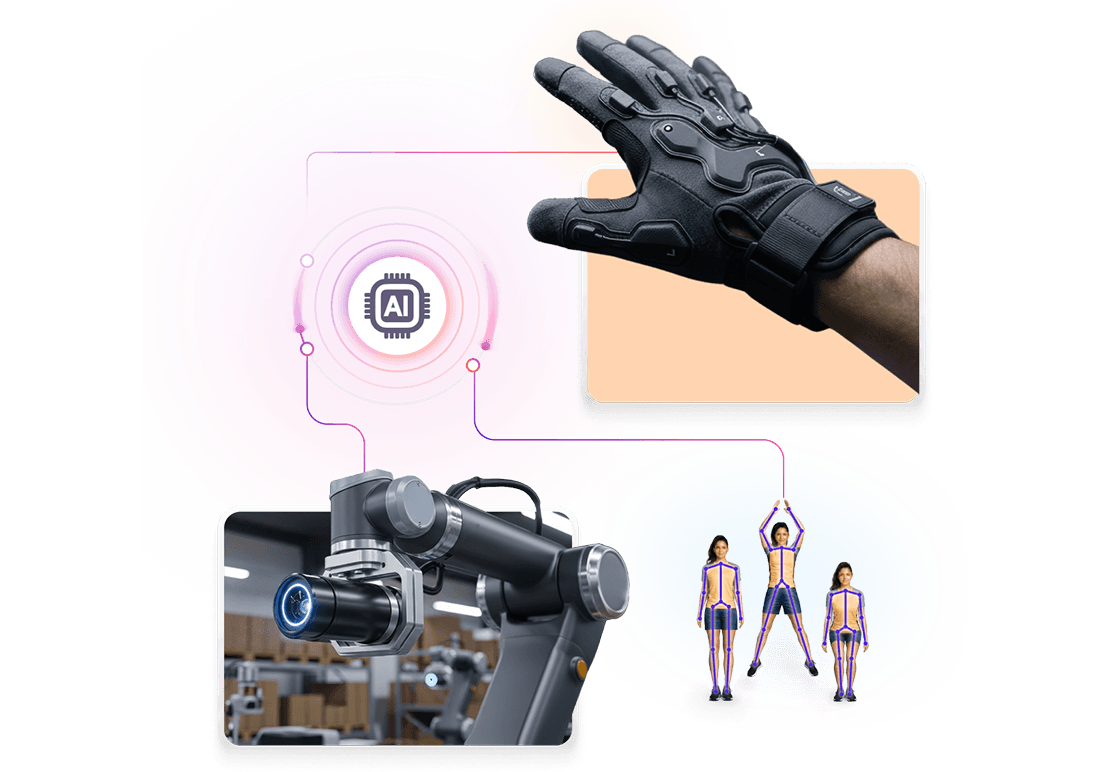
Explore Defined.ai's high-quality, compliant AI data and services, designed to build robotics AI solutions at scale. Kickstart large-scale foundation models and generalist policy training with multimodal, time-synchronized datasets, or fine-tune with task-specific data and benchmarking.
2015
1.6M+
150+


Trusted by:


What Defined.ai's Robotics AI Enables
Defined.ai delivers real-world robotics AI data at scale to support imitation learning, reinforcement learning and generalist policy training for robots operating in complex, unstructured environments across the globe. From industrial robots and surgical robot arms to house cleaning and home robots, our off-the-shelf datasets and custom data collections provide the quality, accuracy and diversity required for any robotics AI project.

Foundation Models
Diverse embodied datasets for generalist capabilities

Imitation Learning
High-fidelity demonstrations for initial policy shaping

Reinforcement Learning
Dense state-action signals for optimization

VLA Models
Vision–Language–Action models link perception, language and physical outcomes
What our customers say
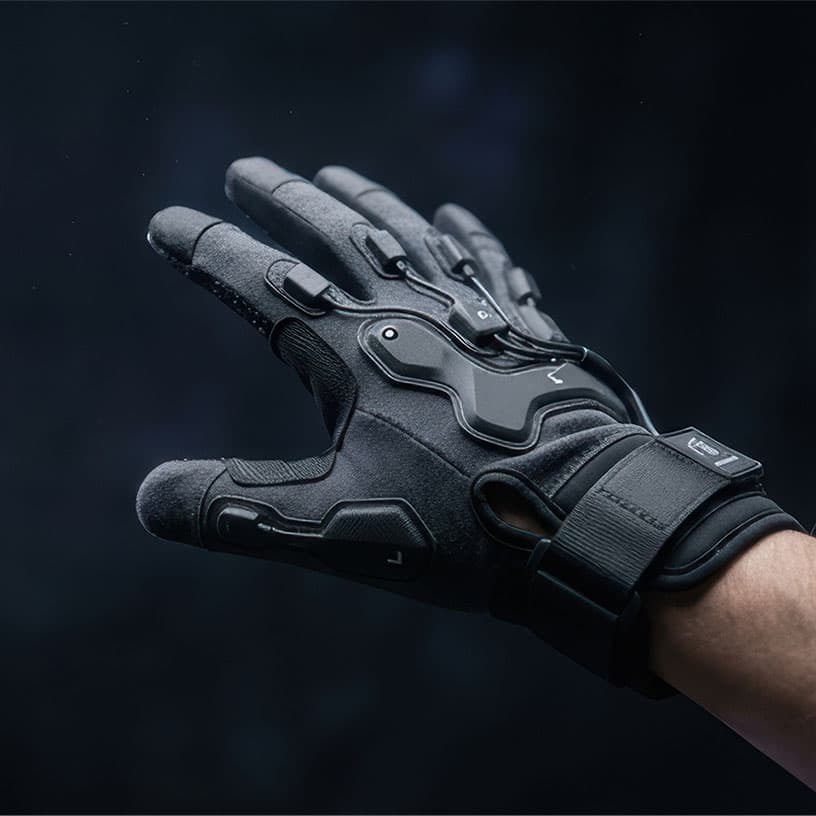

We needed a highly specialized robotics dataset that no one else could provide. Defined.ai delivered 225 hours of annotated human demonstration data, complete with clips ranging from 30 seconds to 30 minutes under diverse conditions. Their ability to source multi-sensor hardware kits gave us flexibility and confidence throughout the project.
How AI Enables Autonomous and Intelligent Robots
From rigid automation to systems that learn in the real world
Robotics AI allows static, pre-programed robots to understand, interact with and respond to new, different and changing environments, make decisions, and then learn from their choices. It’s the same relationship between computer programs simply responding to human commands and task-oriented AI agents that can make decisions, learn and respond to changes and new information in real time.
That shift matters because the physical world is a heady mix of chaos, unpredictability and unknown unknowns. A robot can’t rely on a perfect lighting setup, fixed object locations or “known-good” surfaces. The best AI-powered robots are designed to take new input, update beliefs, choose actions, then learn what worked and what didn’t, often thousands of times. In practice, this is robotics and artificial intelligence coming together as a complete loop: perception, prediction, action and feedback.
Robotics AI Use Cases & Industries
From hospitals to factories: where robotics AI is shipping now
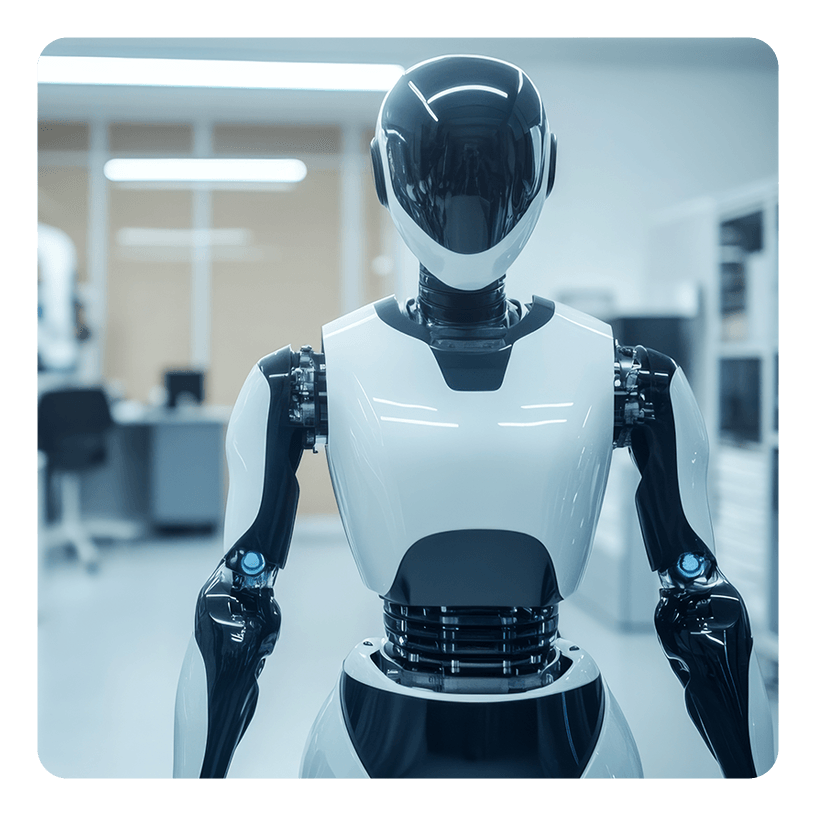
Robotics is no longer limited to fixed, fenced-off cells. Projects are moving beyond pilot phases in many industries, and the systems being deployed are less like rigid automatons and more like flexible automation platforms. Even though many pilots still stall, the direction of travel is clear: more organizations are pushing robotics and automation into frontline operations.
Here are some use case clusters that are driving data needs, model iteration and roadmap complexity for robotics product leaders and technical program managers.


Training Data & Datasets for Robotics AI
Why robotics data is needs a different approach to collection
Overall, there’s a lack of widely available robotics training data, but the deeper issue is that a lot of what exists is not good enough for production: it may be poorly synchronized, inconsistently labeled or missing the long tail of edge cases. Because mobility, grasping and safety depend on aligned signals, time-synchronized, multi-sensor pipelines are essential.
The data needed to initially train traditional or digital AI (like large language models) was everywhere—think of all the content that’s been scraped from the web. Physical AI doesn’t have that luxury: it needs to interact with the real world and make decisions in noisy, busy, dangerous, confusing, unpredictable spaces to learn and evolve.
That’s the heart of robotics data strategy: you’re not just collecting information, you’re collecting evidence of action in context.

Robotics AI Data
Why Enterprise-Grade Robotics AI Requires High-Quality Data
What does “high-quality robotics data” really mean?
Depending on the use case, high-quality AI data can mean different things: so, what does it mean for robotics? While lots of low-quality data was able to create digital AI foundation models—the sheer volume was able to smooth over minor issues—robot learning doesn’t work like that.
Even though as a rule more data is better, robotics AI really needs accuracy, relevance and consistency. In robotics, quality, which largely depends on data annotation, is not a nice-to-have because the model’s outputs can move mass in real space. “Good” robotics data typically has:
accurate labels with clear definitions and low ambiguity
consistent annotation guidelines across time, teams and sites
semantic layers that match the task (objects, affordances, states, contacts, failures)
well-documented sensor calibration and time synchronization
coverage of edge cases, not just the happy path
Industry commentary on robotics data quality points out that poorly built datasets can be effectively unusable due to occlusions, miscalibration and missing context, and that scale only helps once quality is controlled.


A practical glossary for deep learning AI in robotics
If you’re planning a roadmap, it helps to break robotics AI down into the capability groups that actually ship. Just getting started in robotics AI? Speak to an expert
Most robots start with cameras and sensors, then turn raw streams into decisions. Computer vision for robotics typically uses deep neural models such as a convolutional neural network to detect objects, segment scenes or estimate pose. Robotic vision systems then combine those predictions with depth, motion and context so the robot can act safely and consistently.
Robotic perception techniques such as SLAM (Simultaneous Localization and Mapping) are crucial. SLAM is the difference between “the robot saw a chair” and “the robot knows its own position, where the chair is and how to move around it”.
A lot of modern AI robot performance comes from learning policies that map observations to actions. Reinforcement learning is a common approach for training these policies in simulation and, increasingly, in controlled real environments. When teams talk about deep reinforcement learning, they’re usually referring to neural policies that learn complex behaviors like navigation, grasping or long-horizon manipulation through trial and error.
Learning is only useful if the robot can execute. That’s where robotic control systems and motor control systems come in, translating policy outputs into stable trajectories, torques and joint commands. For manipulation, motion planning and control libraries (including GPU-accelerated planning in robotics dev stacks) are increasingly standard.
If your robot works around people, the interface matters. Artificial intelligence human-robot interaction spans speech, gesture, intent and safety constraints. Natural Language Processing is part of that, but in the field, it’s often paired with environment understanding: “bring me the red tote from station 3” is a language instruction plus a perception-and-navigation problem.
You’ll also see teams using the terms embodied AI and physical AI to describe systems that perceive, reason and act in real time in the physical world, not just in software. This can be framed this as AI that is tightly integrated with sensors, spatial computing and action so machines can adapt in complex environments.
Transform your robotics AI solutions.
Talk to an expert about custom robotics AI data collection and annotation, and AI-ready robotics datasets.